
Lea County Release Meanings
A release from the Lea County Detention Center, or LCDC, means that the center’s physical custody ended. It does not always mean the person entered the community. Bond, release on the person’s own recognizance, dismissal, time served, or sentence completion may lead to a community exit. A transfer can instead place the person with the New Mexico Corrections Department, another county, the U.S. Marshals Service, the Federal Bureau of Prisons, or another authority.
The official LCDC roster answers a narrow question: who appears on the current list. Once a name drops off, the underlying Lea County release record becomes the stronger source. That record should identify the event, legal authority, and destination. A court order can explain why release was authorized, while the jail’s activity log shows when the physical event occurred. Those times can differ due to processing, transport, or another hold.
- Community release
- Physical custody ends and no receiving custodian is listed.
- Transfer
- One agency gives physical control to another agency.
- Parole
- Prison custody changes to conditional community supervision.
- Probation
- A court orders community supervision, often with a suspended or deferred term.
- Discharge
- A sentence or later supervision term formally ends.
Lea County Release Types
The words used in a Lea County released inmate record have precise limits. “Bonded out” means the jail hold ended under bond terms, not that the charge was dismissed. “Time served” means the confinement credited in that matter ended, though another case or condition may remain. A dismissal or acquittal is a court result and should be confirmed from the docket. Death is a custody-ending event, but it should never be labeled a release.
| Event | What it means | Best next record |
|---|---|---|
| Bond or recognizance | LCDC custody ended subject to the open case | Court bond or release order |
| Time served or completion | The credited confinement term ended | Judgment, computation, and release log |
| Parole | State-prison custody changed to supervision | NMCD result and Parole Board order |
| Transfer | Another custodian received the person | Receiving-agency field and new locator |
| Dismissal or acquittal | The court resolved a charge | Signed court disposition |
| Detainer or hold | Another authority may assume custody | Release log and receiving-agency record |
A probation order can follow a suspended or deferred sentence without any state-prison release. Likewise, release on parole is not final discharge. The strongest answer comes from matching the Lea County custody event to the later court, NMCD, or federal record.
Lea County Release Record Fields
A useful request covers identity, custody, event, authority, and destination. Ask for the booking sheet plus the matching release or activity-log line. Use a full booked name, an approximate admission range, and the inmate number if known. Request the photograph separately so Adult Records can decide that item on its own. Avoid asking for medical, juvenile, victim, or other protected material.
| Field | What it shows |
|---|---|
| Booked name and inmate number | Links the release to the correct LCDC admission |
| Admission date and time | Marks when the custody period began |
| Facility and holding authority | Identifies physical and legal custody |
| Charges and originating agency | Connects the jail file to the court matter |
| Release date and time | Records when LCDC custody physically ended |
| Release type or order | States the authority for the event |
| Receiving agency or destination | Separates community release from transfer |
The destination field is especially important in Lea County. LCDC houses local detainees and federally held people in the same facility. “Released by LCDC” can describe a community exit, an NMCD transport, or the end of county boarding for a federal detainee. Ask the custodian to state which one occurred.
Note: A receiving-agency name can be more important than the word “released” when Lea County custody ends through transfer.
Request Lea County Release Records
LCDC is administered by Lea County. Written detention requests route through the official LCDC IPRA request sheet, not by default through the Sheriff’s Department. The listed Lea County Public Information Officer is at 100 N. Main Avenue, Suite 4, Lovington, NM 88260, phone 575-396-9110. The sheet asks that the LCDC records custodian at 1401 S. Commercial Street receive a courtesy copy.
- Identify the full booked name, approximate stay, inmate number, arresting agency, and court case if known.
- Ask for the booking sheet, release order, and matching release or activity-log entry.
- Request the exact release time, authority or type, and receiving agency for any transfer.
- Prefer electronic copies and ask for all separable public portions if anything is redacted.
- If the response says only “not in custody,” ask for the existing historical record showing when and how custody ended.
New Mexico’s Inspection of Public Records Act calls for inspection immediately or as soon as practicable. If a record is unavailable within three business days, the custodian must explain when it will be available or why it is withheld. The general outside point is fifteen calendar days unless the request is excessively broad or burdensome under the law. Inspection is generally free. Copy and transmission costs depend on the current statute and custodian policy, so confirm them before ordering.
Lea County Release Record Law
Sections 14-2-1 through 14-2-12 NMSA 1978 form the New Mexico Inspection of Public Records Act. The law favors broad access to government affairs while preserving stated exemptions and protections found in other laws. A booking sheet, release order, activity log, and booking photograph may be requested, but the custodian decides public status record by record. Health data, juvenile information, victim details, security material, and personal identifiers may be withheld or redacted.
The New Mexico functional retention schedule provides a five-year-after-closure period for jail inmate files. Penitentiary and probation or parole files are permanent records with later archival transfer rules. Retention is not the same as online display. Lea County’s live roster has no archive, even while an underlying closed jail file may remain requestable.
Juvenile cases need a separate protected route. New Mexico Courts has excluded juvenile criminal cases from public online display since 2007. Authorized parents, guardians, lawyers, and other qualified parties should contact the juvenile court or facility rather than draw a release conclusion from an empty adult search.
Note: The five-year jail-file rule supports a prompt request, but it does not require Lea County to keep an online archive.
Lea County Release Property Rules
The LCDC detainee handbook adds a practical release detail. A detainee may name a person to receive stored property. That person must present identification, and the ordinary schedule described in the handbook is Monday through Friday from 8 a.m. to 4 p.m., or another time set through records. The release covers all releasable property rather than selected items. Basic clothes remain for the person’s physical release.
Overflow property must be released or mailed within the stated process. Mailing costs may apply, and items left behind may be destroyed. These rules should be confirmed with LCDC because day-to-day implementation can change. Property pickup does not establish that custody ended, and an unpaid medical-account balance is a separate account matter.
For a person moving onto probation or parole, securing identification and property can affect reporting and travel. The Lea County Probation & Parole page explains how to verify the assigned supervision office before appearing in person.
Lea County Release Account Balances
LCDC’s handbook says an unpaid medical-account balance can remain after release and may be collected if the person later returns to custody. That balance is not a release fee. It does not show that the release was blocked, reversed, or made conditional. Keep the account record separate from the release order and activity log.
This distinction prevents a local paperwork issue from being mistaken for legal custody. The Lea County release record should still be read through its date, authority, and destination. Questions about an account belong with the facility, while questions about the court case belong with the clerk.
Find Lea County Released Inmates
Start at the official LCDC detainee roster. If the name appears, it is a current listing rather than proof of release. If it does not appear, write down only that the person was not listed on the date checked. A missing name may reflect release, transfer, data delay, corrected spelling, or technical trouble.
- Save the displayed date and any known LCDC inmate number.
- Search New Mexico Case Lookup for the correct Lea County court and read the event chronology.
- Ask LCDC Adult Records for the release log line, order, and transfer destination.
- If LCDC names NMCD, search the state offender tool. If it names a federal agency, use BOP and the federal docket.
- Use VINE as an alert or corroboration source, then verify with the agency record.
The official roster view below comes from Lea County’s Automated System.
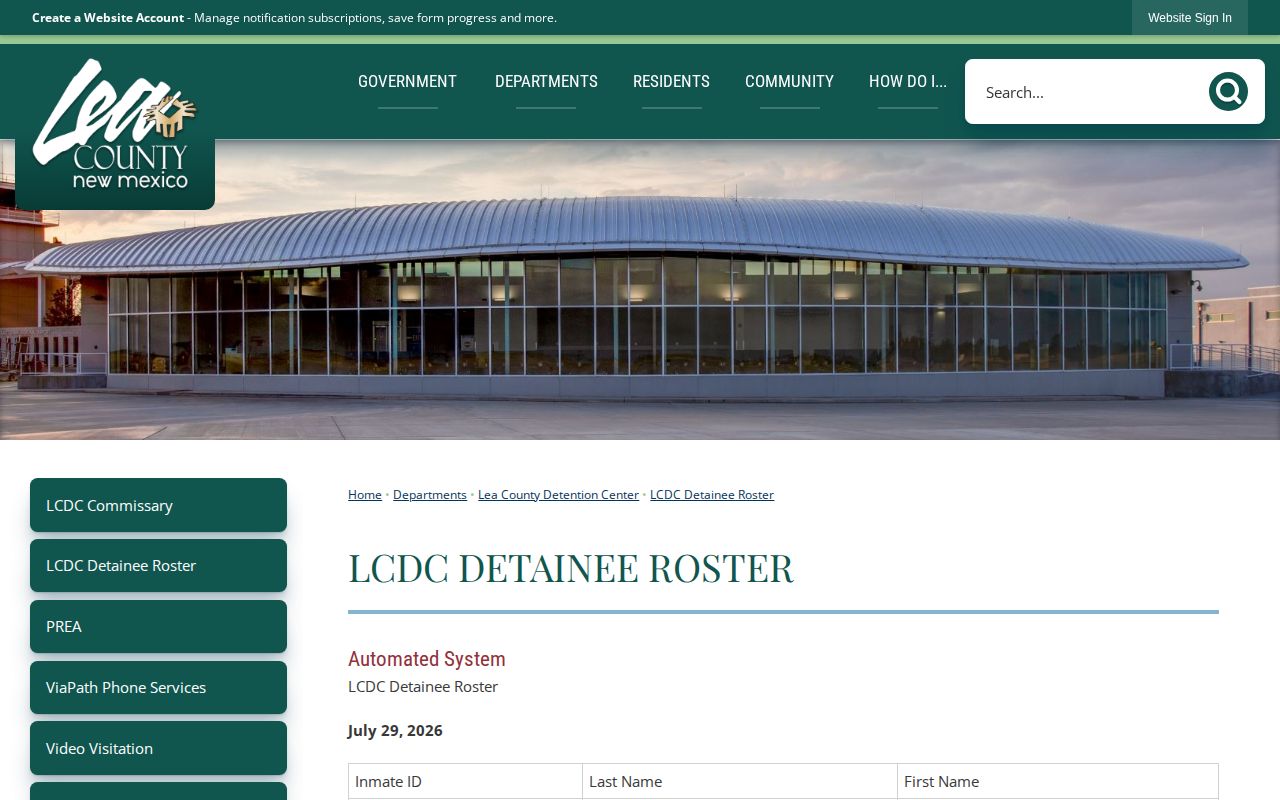
Its three-column format supplies a date, inmate ID, last name, and first name, but it does not affirm a release or preserve an archive.
NMCD Lea County Release Search
The New Mexico Corrections Department offender search covers people incarcerated by NMCD or supervised by its Probation and Parole Division. It does not cover a county-only LCDC stay. Search with a first and/or last name or NMCD number, then separate prison results from P&P results. A supervision result shows a state case in the community; it does not prove unconditional discharge.
| Search field or result | How to use it |
|---|---|
| NMCD number | Use when known because it is more exact than a name |
| First and last name | Try the legal spelling and documented variants |
| Prison result | Read the custody and date labels exactly as displayed |
| Probation/parole result | Confirm active or ended supervision with the assigned office |
| Projected or tentative date | Treat as a changing estimate, not an actual release |
Adult Prison Division data updates nightly, and NMCD asks users to allow twenty-four hours. P&P information updates in real time, though office verification still matters. A record’s disappearance can be technical and does not by itself mean release or the end of supervision.
The official NMCD search instructions show the system’s scope and cautions.
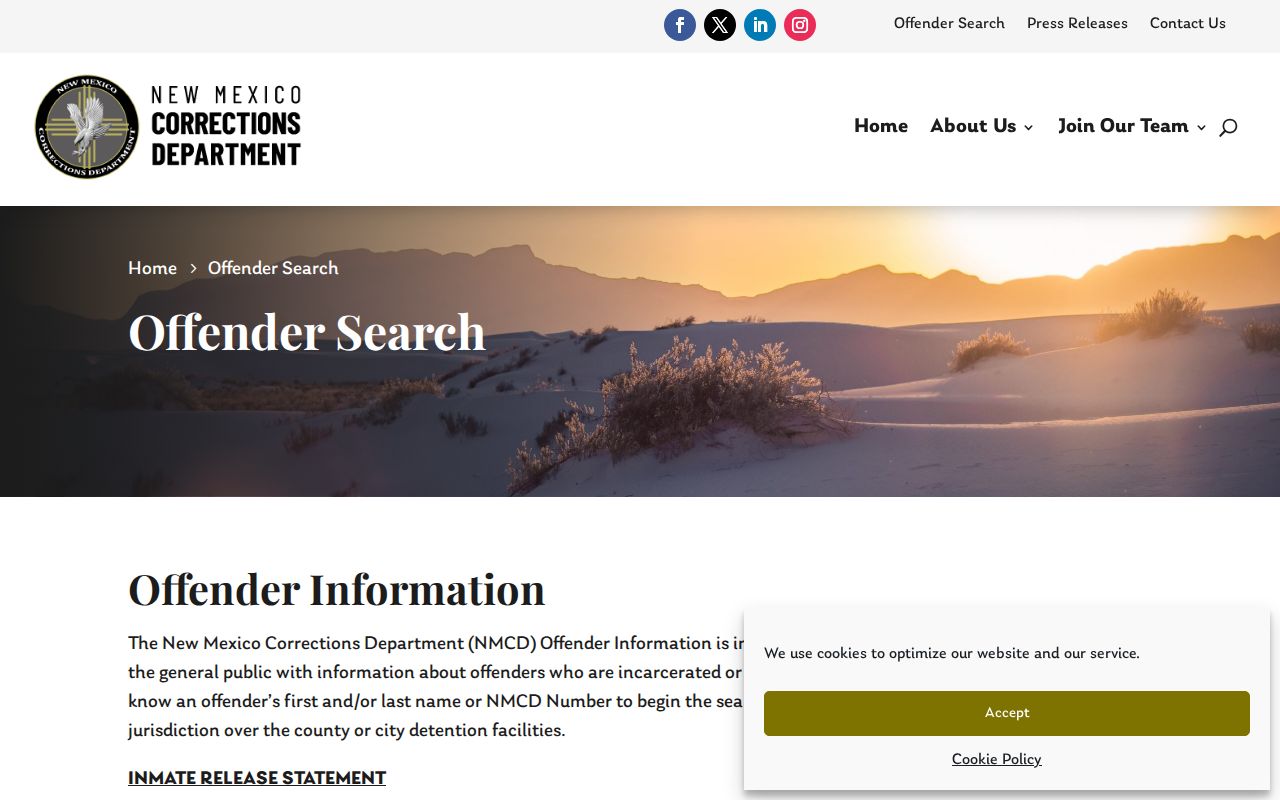
Those limits are why a county release record and an NMCD record answer different parts of the same custody history.
Note: Recheck a very recent state-prison movement after NMCD’s nightly update window, then verify the displayed legal status.
Lea County Release Court Search
The New Mexico Courts Case Lookup can show case events, dispositions, sentences, warrants, and compliance entries. It does not supply downloadable case documents, and its web display is not the official court record. Select the right location and match by case number and identity. For a precise release answer, obtain the signed order from the clerk and match it to the LCDC physical release time.
Lea County felony records usually route through the Fifth Judicial District Court in Lovington. Magistrate courts in Hobbs, Lovington, and Eunice handle many misdemeanors, first appearances, and preliminary felony stages. Jal Magistrate Court is closed, with users directed to Eunice. Municipal information in the statewide lookup is limited to specified historical DWI and domestic-violence convictions, so an absent result can reflect coverage rather than the absence of a case.
The court access explanation documents these limits. Juvenile matters are excluded, and older or nonpublic documents may require a clerk or judiciary IPRA request.
Legal authority: record the signed release order and filing time. Physical event: record the LCDC release or transfer time. Keeping those two lines separate explains processing gaps without guessing.
Note: A canceled hearing or missing municipal result does not prove dismissal, release, or the absence of a Lea County case.
Why Lea Release Requests Shifted
The official LCDC history explains an unusual routing point. Detention administration moved from the Lea County Sheriff’s Department to the Board of County Commissioners in 1984. The present South Commercial Street facility opened in 2005 and combines adult and juvenile components.
That history matters when seeking a modern Lea County release record. Generic directions to ask the sheriff can send a request to the wrong place. The detention center and Lea County public-information contacts shown on the current request sheet are the documented route. The Sheriff’s Department may hold an arrest record, but LCDC holds the jail custody event.
Getting Home After Lea Release
Lea County approved funding for a Fifth Judicial District Court transportation arrangement for fiscal year 2026–27. The program can include a ride from LCDC to a Lea County residence for a financially eligible person. It may also support transport connected with court, treatment, or probation services.
The approved county resolution and its meeting packet describe a need-based, administered option. It is not a universal jail shuttle. LCDC also publishes no general release hour, waiting zone, or public exit door. Confirm that all holds have cleared and ask which area applies before anyone travels.
Federal Lea County Release Transfers
USMS boarding is a major local search issue. LCDC’s official history states that federal adults have been part of its held population. When one of those names disappears, the county’s responsibility may have ended while federal custody continued. The inmate number and receiving-agency entry in the Lea County release log can route the next search to USMS, BOP, or another custodian.
Use the BOP Inmate Locator for federal records generally from 1982 forward. It can show a register number, location, and release date. “Released” or a past date with no BOP location means BOP custody ended, but BOP warns that another system or federal supervised release may follow. The locator view below illustrates the federal-only channel.
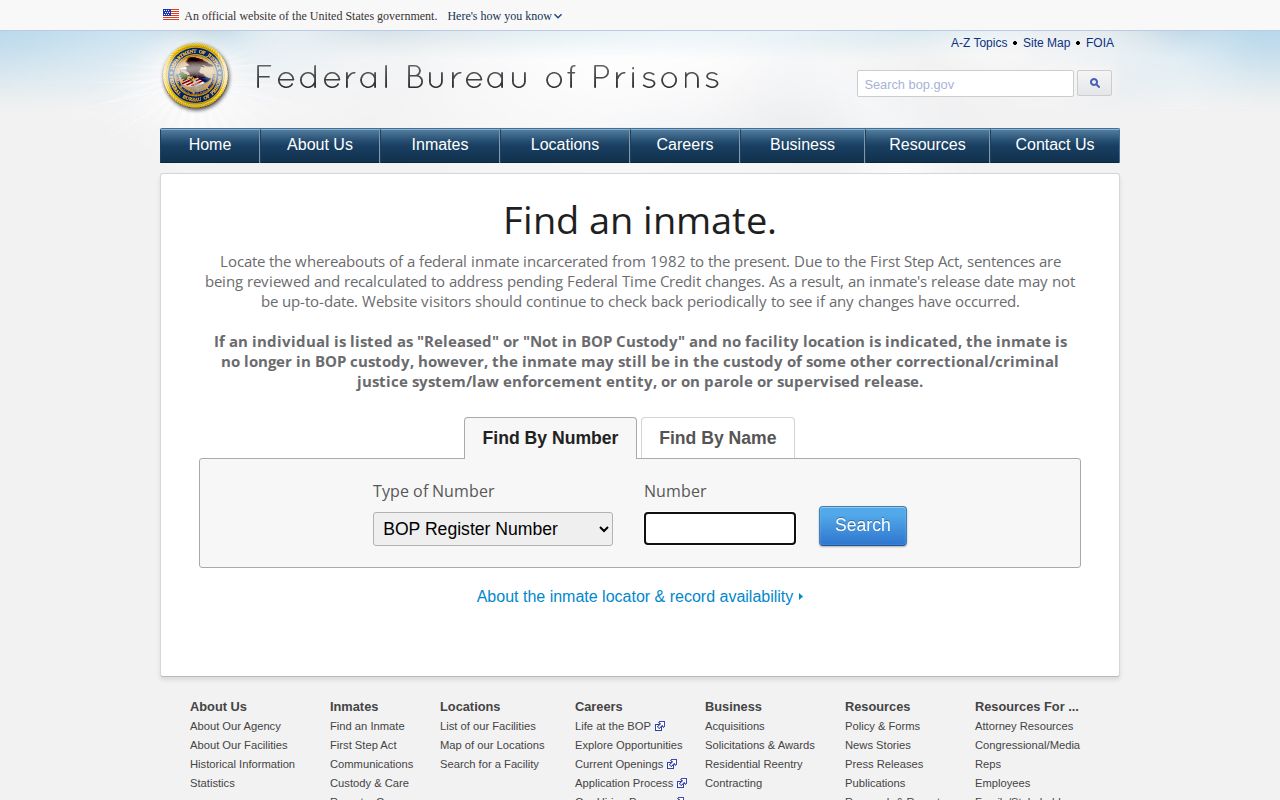
For a USMS detainee who has not entered BOP data, use the federal docket, counsel, or the District of New Mexico USMS office. Never translate “to USMS” into community release.
Note: A BOP release date ends BOP custody only; another agency or a supervision term may still govern the person.
Route Lea County Release Searches
Lea County’s minimal roster combines local detainees and federally held people without showing charges, holding authority, or destination. The inmate number can help Adult Records locate the correct file, but its format alone should not be used to declare which agency had legal custody. Ask for the release or activity-log entry and read the receiving-agency field.
A blank community destination, an NMCD transport, and a USMS handoff lead to different records. Keep the inmate number, booked name, court number, and release timestamp together. Then route the next search to LCDC and the state court, NMCD and the sentencing court, or BOP, USMS, and the federal docket. This local routing step prevents a transfer from being reported as freedom.
ICE Holds After Lea Release
The local confirmed federal arrangement is USMS boarding, not a current ICE detention contract. Still, an ICE detainer can ask a jail to hold a person for up to forty-eight hours beyond the time the person would otherwise leave, allowing ICE to assume custody. That can separate the county release time from community release.
The ICE Online Detainee Locator System serves current detainees and a limited recently released population. Search with an A-number and country of birth, or exact name and country of birth. It is not a full historical release archive. If a documented immigration handoff is unresolved, the ICE Detention Reporting and Information Line is 1-888-351-4024.
Lea County Release and Expungement
Physical release, sentence completion, and expungement are different dates. Under Section 29-3A-5 NMSA 1978, waiting periods for qualifying conviction expungement run from the last date the sentence was completed in any jurisdiction, not necessarily the earlier day the person left jail or prison. A discharge certificate or court completion record may therefore be essential.
Expungement is a court process, not an automatic effect of release. The New Mexico Courts expungement materials provide the current forms and process. Protected, sealed, or expunged material should not be rebuilt from stale copies. For a lawful current account, rely on the court and agency records that remain available.
Compare Lea County Release Sources
Each official system proves a different fact. Match the person’s custody type to the source instead of searching every database as if coverage were interchangeable.
| Situation | Start here | What confirms release |
|---|---|---|
| Still listed at LCDC | Current LCDC roster | It indicates current listing, not release |
| No longer listed at LCDC | Adult Records and court | Release log plus signed order |
| Transferred to state prison | NMCD offender search | Exact status/date and institution record |
| On state supervision | NMCD P&P result | Assigned office and legal status |
| Federal custody | BOP locator and federal docket | BOP date plus downstream-custody check |
| Possible ICE handoff | ICE locator or DRIL | ICE record and immigration case documents |
VINE can add custody-change alerts, subject to its current service notice. The New Mexico Sex Offender Registry applies only to people with a statutory duty to register. It is not a broad Lea County released inmate search, and absence from it says nothing about general custody history.
Note: Record the source, date checked, exact query, returned label, and any agency confirmation in a short verification log.
Lea County Release Facilities
These local components require different release paths. LCDC is the main county detention facility. The former Lea County Correctional Facility is a historical NMCD prison site that stopped holding NMCD prisoners in 2025. Juvenile access is restricted. Federal boarders may move under USMS authority, and municipal police holding is short-term processing rather than a separate long-term jail roster.
- Lea County Detention Center: confirm release or transfer through LCDC records and the court.
- Former Lea County Correctional Facility: trace historical prisoners through NMCD.
- Lea County Juvenile Detention component: use authorized juvenile channels.
- U.S. Marshals detainees housed at LCDC: follow the receiving federal agency.
- Municipal police holding in Hobbs, Lovington, Eunice, Jal, and Tatum: check the arresting agency, court, and LCDC.
A facility name alone does not state the result. The decisive Lea County released inmate facts remain the release time, authority, and destination.