
Lea Juvenile Release Access
The juvenile component is part of Lea County Detention Center, but juvenile custody does not become an adult public-record search merely because the spaces share a county facility. The official facility description identifies a 32-bed juvenile portion. New Mexico law and court access rules protect juvenile identity and case information. Public tools intentionally omit much of this material.
A release can return a child to a parent or guardian, place the child under court-set terms, or move the child to another lawful placement. The precise path belongs in the court and facility record. Public absence does not distinguish among those events. Authorized parties should ask the facility or lawyer for the date, legal authority, recipient or placement, and any instructions they are entitled to receive. Others should respect the restriction instead of trying to reconstruct a protected history from old copies or indirect sources.
Lea Juvenile Records Contact
The juvenile space operates within Lea County Detention Center in Lovington. The official LCDC facility page confirms the combined adult and juvenile scope. The dedicated Juvenile Control number is the practical first contact for authorized access. The general administration number can route a caller when the dedicated line does not resolve the correct unit. Published sources do not state juvenile records-access hours, so call to confirm rather than applying a general county schedule.
Lea County Juvenile Detention component1401 S. Commercial Street
Lovington, NM 88260
Juvenile Control: 575-396-8678
LCDC administration: 575-396-8669
Hours: call to confirm
A parent or guardian should also remain in contact with the child's lawyer and the juvenile court handling the matter. Counsel can identify the governing order and explain who is permitted to receive it. The county's general LCDC records sheet does not erase juvenile confidentiality. The custodian may deny, limit, or redact a request under the laws that protect the child and others named in the file.
Lea Juvenile Court Record Limits
The New Mexico public-access explanation states that juvenile criminal cases have not displayed online since July 1, 2007. That is a deliberate coverage limit. New Mexico Case Lookup therefore should not be used as a test of whether a Lea County child has a case, remains in detention, or was released. The public interface is not the official court record even for categories it does display.
Juvenile court orders can address detention, release, placement, supervision, and later hearings. The actual meaning depends on the order and case. A release authorization may precede physical departure while processing, transport, or another lawful hold is resolved. An authorized person who needs timing should compare the signed order with the facility movement record instead of relying on a docket headline.
The adult-facing Lea County released-inmate workflow on the home page should be used only for adult county, state, or federal records. It does not expand juvenile access.
Lea Juvenile Record Retention
The New Mexico functional retention schedule distinguishes detention records and includes special treatment for juvenile materials. Retention means an agency keeps a record for a defined period or under a defined rule. It does not mean that the record becomes public, appears in an online search, or may be disclosed to any requester.
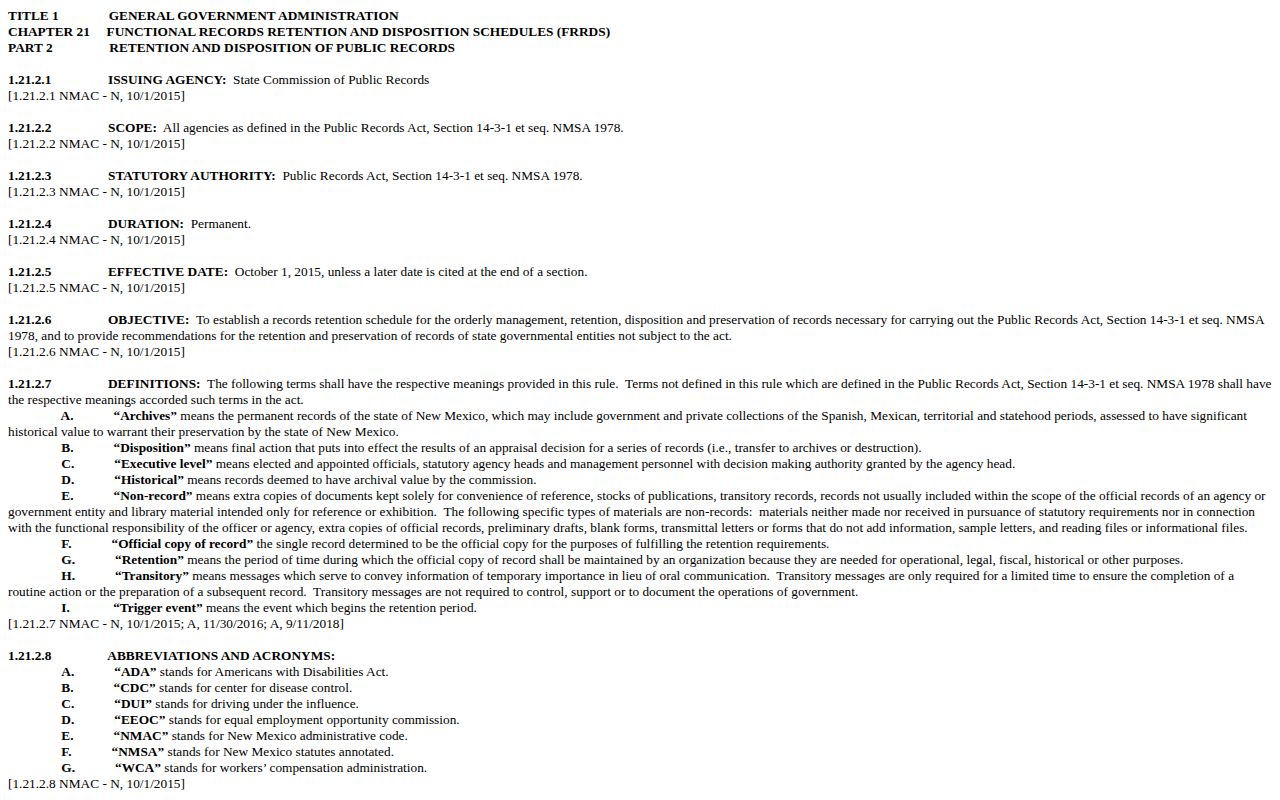
The schedule supports asking the responsible office whether an authorized record still exists, while confidentiality rules continue to govern who can receive it and which details must be removed.
Keep a narrow purpose and request. Identify the movement or order needed rather than asking for a whole juvenile file. Medical details, victim information, personal identifiers, and security material bring added restrictions. A limited request helps the custodian separate any releasable portion without exposing information unrelated to the authorized need.
The adult jail schedule's five-year-after-closure rule should not be copied into a juvenile request without checking the proper record category. New Mexico's retention rules distinguish juvenile files. Ask the custodian which schedule and confidentiality provision applies to the exact record. If a record has been sealed, expunged, or otherwise restricted, the lawful current status controls. An older public reference cannot reopen access that the court or statute has closed.
Lea Juvenile and Adult Records
The county facility contains both adult and juvenile space, but their public paths differ. The adult roster is a dated list with inmate ID and name. It is current-only and incomplete even for adult release questions. It is still not a juvenile locator. Juvenile court material is excluded from the public case display, and the juvenile detention record follows its own access limits.
| Question | Adult LCDC path | Juvenile path |
|---|---|---|
| Current public listing | Minimal adult roster may provide a lead | No public absence inference |
| Release authority | Release order and adult activity log | Juvenile court or counsel, subject to access |
| Physical movement | Adult Records release or transfer entry | Juvenile Control record for authorized parties |
| Public court lookup | Some adult case events may appear | Juvenile cases excluded from public display |
| Record request | IPRA subject to exceptions | Restricted by juvenile confidentiality and authority |
This difference prevents a common and harmful error: treating silence in a public tool as proof. For a juvenile matter, the protected channel is the correct channel even when it takes more direct coordination with a guardian, lawyer, facility, or court.
Protect Lea Juvenile Release Records
Sealed, expunged, juvenile, and otherwise protected information should not be rebuilt from mirrors, screenshots, or cached pages. A juvenile case can involve children, victims, family members, and sensitive placement facts. Even an authorized recipient should share only what is needed for the lawful purpose at hand and follow any limits stated by the court or custodian.
Registry data does not solve a juvenile detention question. The New Mexico Sex Offender Registry covers only people and facts subject to specific registration laws. It is not a general released-person list, and absence cannot establish that no juvenile case or custody event exists. Authorized parties should use Juvenile Control, counsel, and the juvenile court rather than an unrelated registry result.
Notification tools are limited too. New Mexico VINE can provide custody-change information in participating adult or state systems, subject to current service notices, but it should not be presumed to expose a protected juvenile record. A failed search or unavailable registration is not proof of release. Authorized family members should ask Juvenile Control or counsel which notice process applies to the case and how contact information must be kept current.
When records seem to conflict, the signed juvenile order and authorized facility record outrank rumor or an old copy. Ask the responsible office to correct an apparent error and retain the written response. Do not publish the child's identity while seeking clarification.
Note: A 32-bed design describes facility capacity, not a current juvenile count, release rate, or level of public access.