
Request Lea 72-Hour Releases
Neither Lea County nor LCDC publishes a rolling three-day release view. The online LCDC roster lists current detainees only. It cannot be filtered to “released,” and it offers no historical archive. Lead with a written request for the existing release/activity-log fields between two exact Mountain Time endpoints.
Define a true 72-hour span rather than saying “over the weekend.” State the start date, start time, end date, and end time. If the goal is a Friday-through-Monday period, use the actual endpoints that cover it. Ask for each adult’s name, inmate or booking number, admission date and time, release date and time, release authority or type, and receiving agency for transfers. Protected fields may be redacted.
Lea Weekend Release Records
A 72-hour request helps bridge office and court schedules. It can capture Friday action processed later, weekend physical exits, and Monday entries tied to earlier orders. No published LCDC source states a weekend release schedule, public exit hour, or promised posting cadence. Do not infer one from the roster’s date or “Automated System” heading. A holiday that closes a records office may also delay confirmation even when the physical custody event occurred on time.
The legal event and physical event may occur at different times. A judge can sign an order before jail staff finish identity checks, property handling, other-hold review, and discharge processing. Build a two-line chronology: the court order’s filing or signature time, followed by the LCDC log’s actual community release or transfer time. If the times differ, report both.
For a narrow same-day interval, use the Jail Releases: 24 Hours workflow. Note: A canceled hearing or missing docket entry does not by itself establish a Lea County release.
Check Lea Three-Day Release Activity
Start from the agency record, then route each result by custody type. This avoids the false assumption that every person leaving the county jail walked into the community. LCDC boards U.S. Marshals detainees, and state-sentenced people may transfer to NMCD.
- Choose exact endpoints in Mountain Time and identify whether the span is rolling or based on three calendar dates.
- Submit the Lea County records request for existing release/activity-log fields.
- Classify each response as community release, court action, NMCD transfer, federal handoff, other transfer, or another event.
- Use Case Lookup and the filing court for the signed order and legal basis.
- Search NMCD for a state destination, BOP and the federal docket for a federal destination, or ICE only when a documented immigration handoff exists.
If the request is for one named person, include the full booked name, approximate admission, arresting agency, case number, and roster inmate ID if known. Ask for the individual release/activity-log line and release order rather than a county-wide compilation.
Lea 72-Hour Release Fields
The requested log should answer identity, custody, event, authority, and destination. Those five points are more useful than a simple list of names. They allow a reader to match the right custody episode and avoid calling a transfer a community release.
| Requested field | Why it matters |
|---|---|
| Name and inmate or booking number | Identifies the correct LCDC record across the three-day span. |
| Admission date and time | Connects release to the right jail stay. |
| Release date and time | Places the physical custody event inside or outside the window. |
| Release type or authority | Shows the basis recorded by the detention center. |
| Receiving agency | Reveals whether custody continued with NMCD, USMS, or another authority. |
Compare that inventory with the live roster’s fields: page date, inmate ID, last name, and first name. The roster lacks every event field needed for a real three-day release list. It can provide a useful ID for the request, but an earlier screenshot and later absence yield only a candidate.
Lea Roster Has No Archive
The minimal roster is a local data quirk. It has no booking photo, charge, bond, booking timestamp, release reason, receiving agency, or detail page. It also has no stated refresh interval. A comparison of snapshots cannot tell whether a name changed, a record was fixed, the site failed, or the person moved to another custodian.
The official directory is still useful for reaching the correct county channel. The Lea County staff directory supports detention and records routing when the roster is unavailable. The image below shows that official contact path.
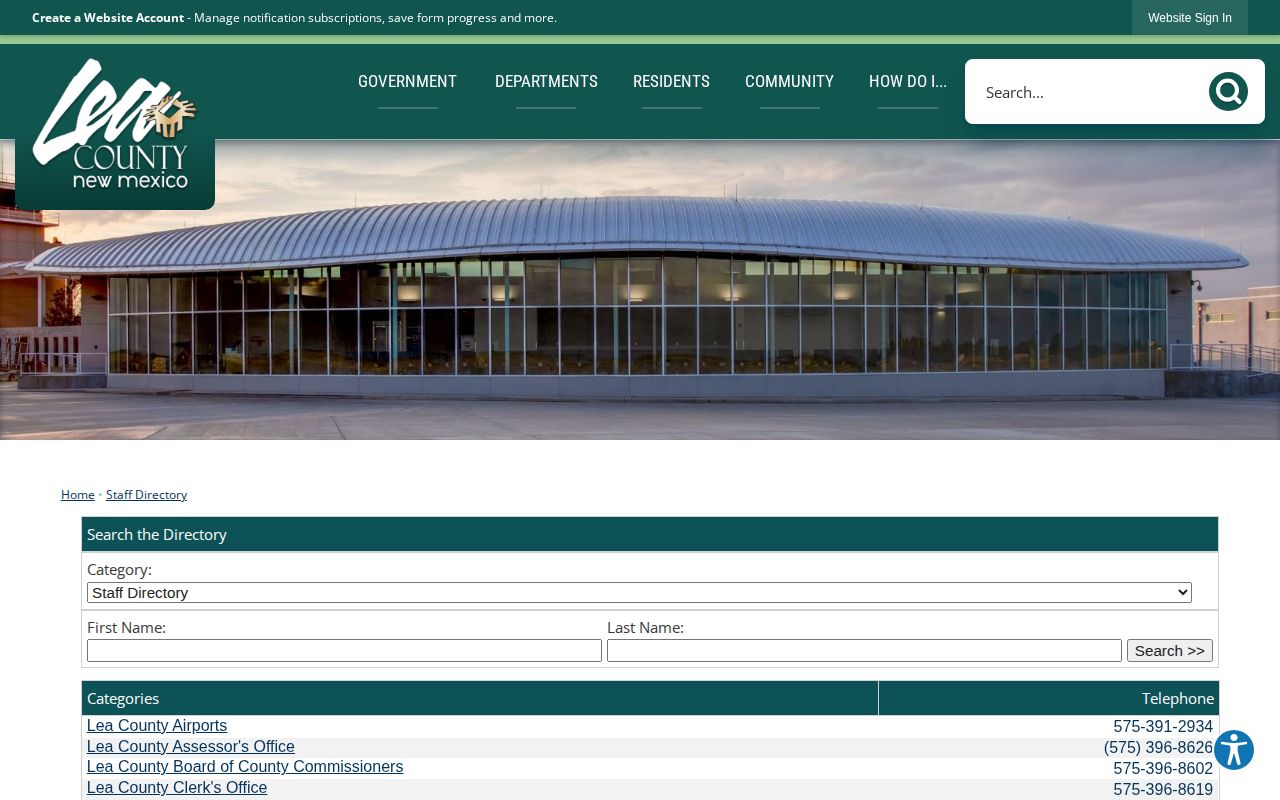
That directory helps locate an office; it does not turn current roster data into a release history. If staff gives only a verbal “not in custody” answer, follow with a written request for the record showing when, why, and to whom custody ended.
Lea Release Request Timing
New Mexico’s Inspection of Public Records Act governs the request. Inspection is generally free. If a record is not available at once or as soon as practical, the custodian must address availability within the statutory response framework. A broad or burdensome request may take more handling than a focused three-day span. Ask for electronic copies and existing fields to keep the request precise.
When a court document is needed, the New Mexico Courts IPRA portal routes requests to the judicial branch office that maintains it. The portal view below is useful when the online case display lacks the signed order.
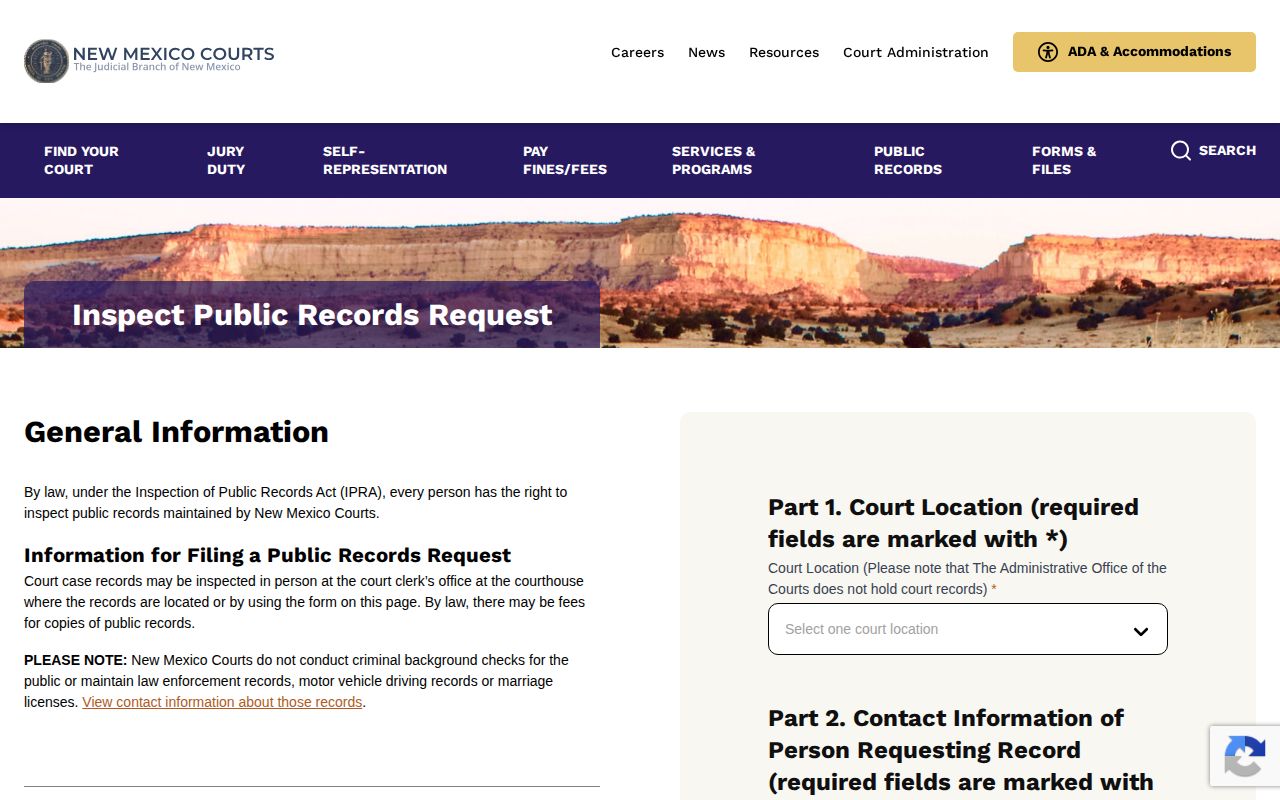
The portal supplies a document route, while LCDC’s release log supplies the physical custody event. Use both if a Friday order and Monday release entry appear to conflict. Note: Court web data is not the official record, and general Case Lookup does not provide the filed documents.
Route Lea Release Results
An NMCD transfer should be checked in the official state offender search. Adult Prison information updates nightly, and the department asks users to allow 24 hours. A probation or parole result reflects community supervision, not unconditional discharge. NMCD has no jurisdiction over county jail stays, so it is not a substitute for LCDC’s release record.
A USMS transfer requires the federal docket, BOP locator when applicable, counsel, or the District of New Mexico USMS channel. A past BOP release date means BOP custody ended, but another system or supervised release may follow. New Mexico VINE can provide custody-change alerts where the agency and person are available, subject to its posted upgrade notice. It should corroborate, not replace, the jail log.
A roster result should also be checked with care across the wider span. “Listed now” supports current listing at the time viewed, not the booking date or expected exit. “Not listed” proves even less. Preserve the inmate ID if one appears because it can help Adult Records find the correct file. If names or dates conflict, rank the signed order and custodian-produced log above a screenshot or third-party copy.
After community release, a later NMCD probation or parole result may show state supervision only when such a case exists. A person who bonded out of LCDC does not become an NMCD parolee merely because county custody ended. This boundary keeps the three-day release list from being confused with a statewide supervision list.
Case Lookup may provide a register of actions, but it does not supply the filed order. For Lea felony matters, contact the Fifth Judicial District Court clerk when the signed document is needed. Magistrate courts cover many misdemeanors and early felony stages. Municipal data in the statewide public interface is limited, so a missing municipal result may call for the local clerk or arresting agency.
Keep the chronology simple. First note the legal authority and its date. Then note LCDC’s physical release or transfer and its date. Add a third line only when NMCD, USMS, BOP, ICE, or another county took custody. This format exposes gaps without forcing three different systems into one misleading “release date.”
For each source, save the query, check time, exact label, and contact response. That short log helps resolve updates after the three-day window closes.