
Lea Release Mugshots Are Not Posted
Lea County’s publication stance is visible in the design of its official LCDC roster. The dated current-custody list displays inmate ID, last name, and first name. It has no photograph, detail page, booking timestamp, charge, bond, release field, or archive. Once a person leaves the list, there is no county web profile to open.
This does not prove that no photograph exists. New Mexico arrest-record rules recognize photographs and booking sheets as record types, while the county retention schedule places mugshots within inmate case files. Disclosure still proceeds record by record under the Inspection of Public Records Act and any applicable exception. The safest path is a request for the photo from the exact admission. Include the booked name, approximate date, and inmate number so Adult Records can distinguish one custody episode from another.
Lea Release Mugshot Channels
Each source covers a different record. Use the custody path first, then match the image to the agency and admission. Do not substitute an NMCD identification image for an LCDC booking photo or treat a news image as an official release record.
| Channel | Photo? | How to access |
|---|---|---|
| LCDC current roster | No | Names and inmate IDs only; no released view. |
| Official Lea mobile app | None verified | Do not use unrelated “Lee County” apps. |
| LCDC records request | Requestable | Ask separately for the booking photograph from the exact admission. |
| NMCD offender record | May include one | Applies to state custody or supervision, not a county-only stay. |
| News or official release | Sometimes | Use as a dated arrest-stage source and pair with the court outcome. |
| Third-party copy | Sometimes | Treat only as a lead because identity and status may be stale. |
VINELink may show custody information but is not the primary Lea County booking-photo repository. Court exhibits are also not a routine image channel and can carry access restrictions. Avoid mining protected filings.
No Lea Mugshot App Verified
No official Lea County Sheriff or LCDC application with jail releases or booking photos was verified. Search results for similarly named counties often point to “Lee County” products in other states. Geography must be checked before trusting any app listing.
The absence matters because many counties place images in a mobile product even when the web roster is sparse. No such alternate official Lea County channel was verified. Use the county request process instead. The Jail Releases: 24 Hours page also explains why the current roster cannot be turned into a same-day release feed.
Request Lea County Booking Photos
Send a narrow written request through the LCDC IPRA sheet. It directs requests to the Lea County Public Information Officer and asks for a courtesy copy to the LCDC records custodian. Named contacts can change, so check the current form before sending.
- Give the full booked name, approximate admission dates, inmate or booking number, arresting agency, and case number when known.
- Request the booking photograph taken for that exact admission as a separate record.
- Separately request the booking sheet, release order, and release/activity-log entry if release context is needed.
- Ask for electronic copies and all reasonably separable public portions.
- Ask the custodian to state the legal basis for any withholding or redaction.
- Match the returned image and identifiers to the court case before drawing any conclusion.
New Mexico IPRA allows inspection of public records subject to exceptions. Inspection is generally free. If records are not available at once or as soon as practical, the custodian follows the Act’s response process. Do not request medical, juvenile, victim, confidential, or needless personal data.
Lea State Release Images
A person transferred from LCDC to the New Mexico Corrections Department enters a separate record system. The NMCD offender search may include an identification image in a public result or detail interface. It covers NMCD incarceration and probation or parole supervision, not county or city jail custody.
Match by NMCD number when possible, then verify the name and exact result type. A probation or parole record reflects supervision in the community. It is not proof of unconditional discharge. Adult Prison data updates nightly, and NMCD asks users to allow 24 hours after a recent movement. The image should be described as the NMCD image, not the LCDC booking photo.
Check Lea Mugshot Context
Local news, an official arrest announcement, or a third-party collection may preserve an image after the jail’s current list changes. Such copies are leads. They may be stale, attached to the wrong person, stripped of the court outcome, or built around payment. No commercial mugshot publisher or removal service is endorsed or linked.
Verify the booked name, agency, date, inmate number, and case number. Then read the New Mexico court chronology for dismissal, judgment, sentence, release order, or later completion. The Lea County release record workflow connects those sources. A press image tied to an allegation remains a dated publication, not a substitute for the signed disposition.
Lea Mugshots and Completion Dates
New Mexico expungement timing can make the final completion record more important than the day a person walked out. For qualifying convictions, Section 29-3A-5 measures the waiting period from the last date the sentence was completed in any jurisdiction, subject to offense tiers and exclusions. Physical release on parole may precede that completion date.
The discharge-law source below shows why release and final supervision completion must not be merged.
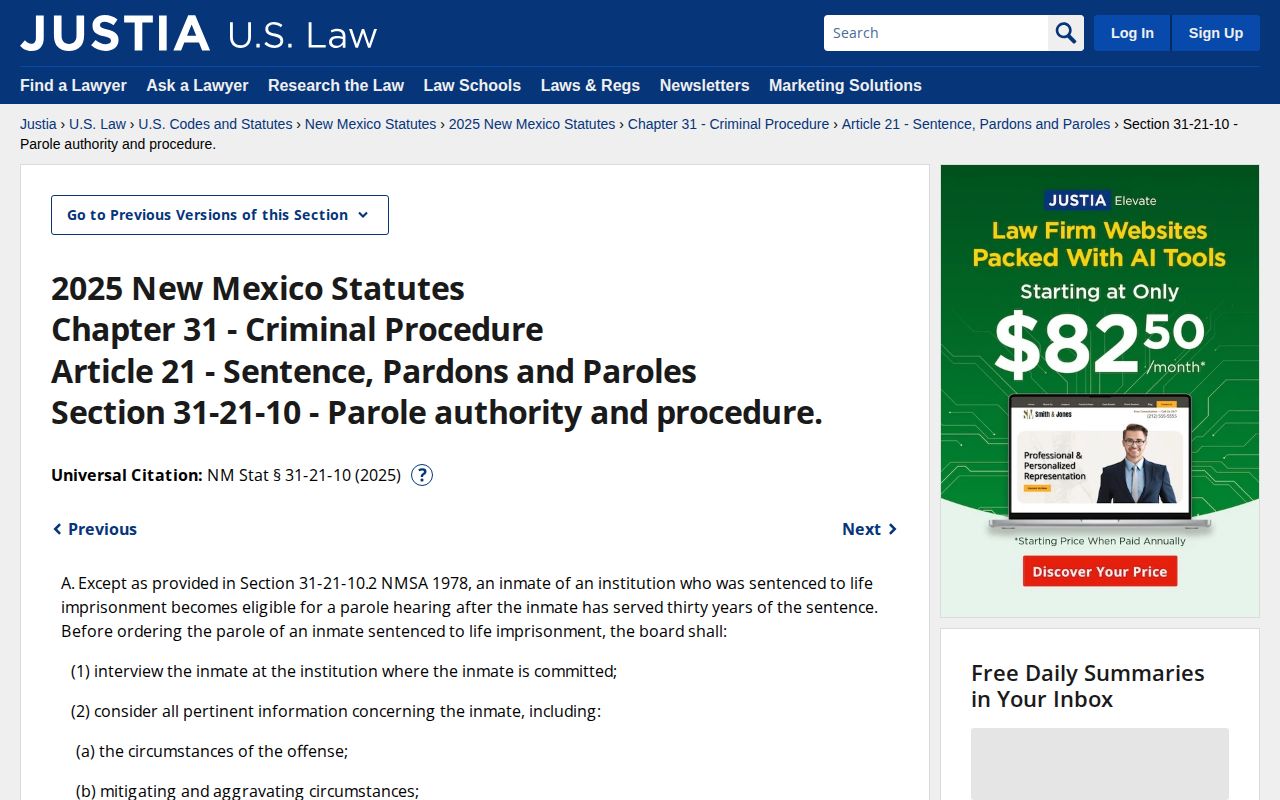
A final Board order and certificate of discharge can establish the later endpoint for a state parole case. An old mugshot does not reveal it. This timing is one reason stale image-based conclusions are unreliable.
Lea Mugshot Expungement Effects
For an arrest without conviction, Section 29-3A-4 provides a petition path generally after one year from final disposition, subject to its requirements. The accompanying official-law capture shows that statutory source.
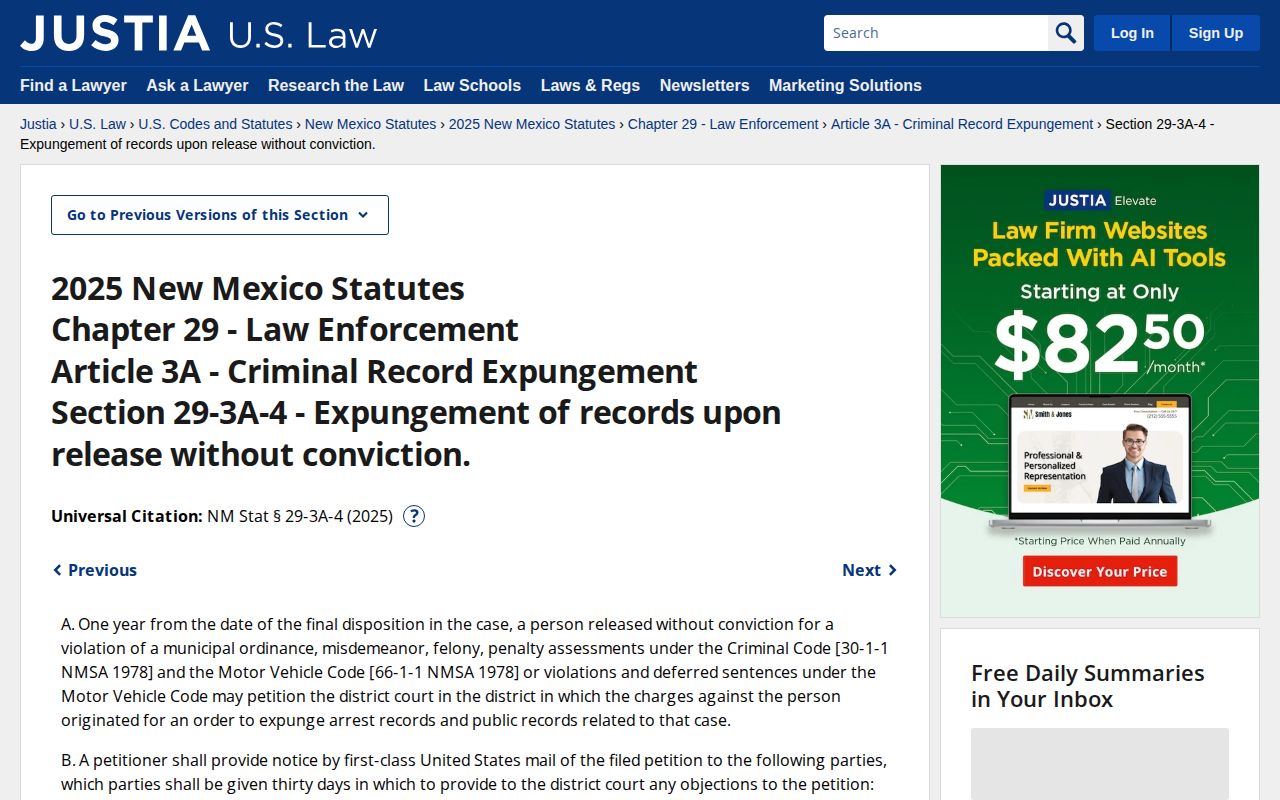
Expungement is a court process, not an automatic result of release. Use current judiciary forms and the proper clerk. An order governs agencies and courts as the Act specifies, but it does not promise that every independent news copy vanishes. Sealed, expunged, juvenile, or otherwise protected material should not be rebuilt from caches.
No verified statewide law requires every sheriff to publish mugshots, and no specific New Mexico anti-pay-to-remove statute was verified. Ask an official source to apply the lawful order to its record and avoid paying an unverified removal service.
Lea Mugshot Record Retention
Online visibility and agency retention are different. New Mexico’s functional schedule gives adult jail inmate files a five-year-after-closure retention rule. That supports a prompt request after a person leaves the roster, but it does not require LCDC to publish the image online for five years. State penitentiary and probation or parole files follow different permanent-record schedules.
A custodian may redact protected details or withhold a record under a lawful exception. Juvenile information requires special care and is excluded from the public court lookup. Medical, victim, security, and personal identifier material should not be sought merely because it could sit near a booking image in the same file.
Correct Lea Mugshot Errors
If the official roster or returned file uses the wrong spelling or image, contact LCDC Adult Records with the inmate ID, admission date, and a copy of the disputed record. Ask for the correction process in writing. A court disposition error belongs with the filing court clerk, while an NMCD image or status issue belongs with the offender-search and institution verification channels.
Third-party copies should be approached with the official correction or expungement order in hand. A source may have its own process, but payment does not establish truth or legal compliance. Keep the communication and response. When an official photo and case record disagree, the agency and court should reconcile their own records rather than leaving the reader to guess.
The most reliable description stays narrow: which agency took the image, which booking it belongs to, and what the current official disposition says. A photo alone cannot supply those facts.
Verify Lea Release Mugshot Context
Request the release record with the photo when context matters. The useful fields are the booked name, booking number, admission time, release time, authority or type, and destination. A transfer destination is especially important because LCDC houses U.S. Marshals detainees and may send a state-sentenced person to NMCD.
Read the court case as a chronology. A bond event means custody may end while the case continues. Dismissal or acquittal is a court outcome. Time served refers to credited confinement. Parole means conditional release from state prison. None of these facts can be read from facial appearance or from the mere existence of a booking image.
When the image is tied to an expunged or sealed matter, follow the lawful current record. Do not use a cached copy to recreate information the court or agency no longer displays. Juvenile images and identifying records demand even stricter handling and should be left to authorized channels.