
LCDC Federal Release Paths
Lea County's official detention page confirms that LCDC houses U.S. Marshals Service detainees. USMS holds federal pretrial prisoners from court-ordered custody through acquittal or conviction and delivery to BOP, often using local jails for boarding. LCDC's physical housing role can end while federal legal custody continues without interruption.
A federal detainee might leave LCDC for a hearing, another contracted site, designation to a BOP institution, release under a federal court order, or a handoff to a different authority. The county roster cannot state which event occurred because it provides only a date, inmate ID, and name. Obtain the release or movement log and ask for the exact receiving agency. The word “released” in a county transaction should not be rewritten as community release when the destination says USMS, BOP, or another custodian.
Confirm an LCDC Federal Release
The most reliable path links a county movement record to a federal case or locator result. Use at least two identifiers. A full name alone can match the wrong person, while a federal register number or case number narrows the record. Preserve each source's exact label and the time checked.
- Check the LCDC roster only for a current listing and save the inmate ID when available. Absence is not release proof.
- Ask LCDC Adult Records for the release or movement entry, including date, time, authority, and receiving agency.
- Review the federal criminal docket through PACER or counsel for detention, transfer, judgment, and release orders.
- Search BOP by register number or exact name when the case may have entered BOP custody.
- Contact the District of New Mexico USMS office or case counsel when the transfer trail remains unresolved.
The county record shows what LCDC did. The federal docket shows court authority, while BOP covers its own custody system. None should be forced to answer for another. If the county says “to USMS” but BOP has no match, the person may still be in pretrial or contract custody outside the BOP locator's relevant stage.
Federal court timing can create another gap. A detention or release order may be entered before the Marshals complete transport and physical processing. PACER supplies the docket trail, but counsel or the clerk may be needed for the signed document and case context. Keep the order time separate from the LCDC movement time. If a sentence was imposed, also distinguish delivery to BOP from later BOP release, since those are opposite ends of the federal prison episode.
LCDC Federal BOP Record Search
The BOP Inmate Locator generally covers federal inmates from 1982 forward and updates daily. Search by BOP, DCDC, FBI, or INS number where accepted. A name search can be refined with middle name or initial, race, age, and sex. Results can show name, register number, age, race, sex, release date, and location.
The BOP record explanation states that a past release date with no location, or the label “Released,” means BOP custody ended. It does not prove that the person entered the community. Another correctional system, a state case, or federal supervised release may follow. Future dates can also change after sentence recalculation.
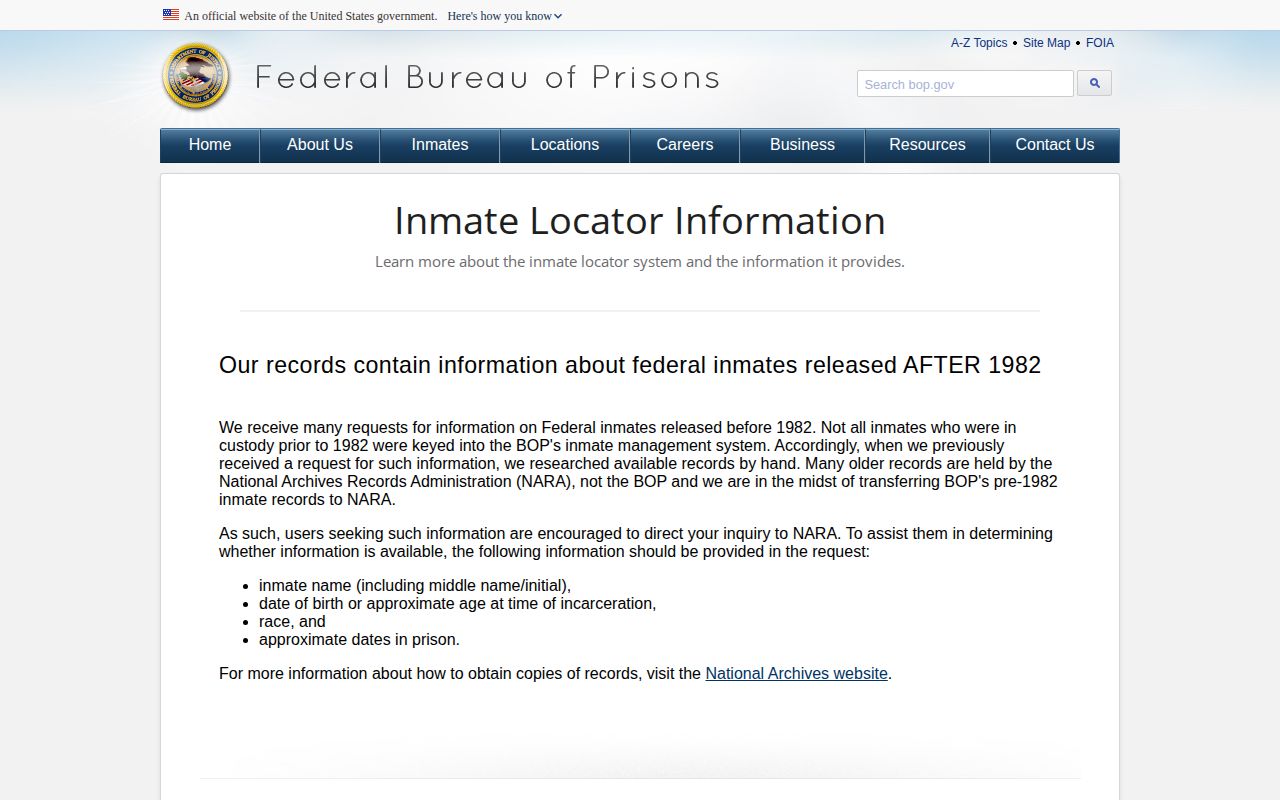
The BOP explanation supplies the precise federal meaning of a released result and the warning to check for downstream custody before drawing a broader conclusion.
LCDC Federal Records Contacts
LCDC Adult Records is the county source for the local housing episode. The District of New Mexico U.S. Marshals office supplies federal custody context, and case counsel may have the quickest access to a current order. No separate public release desk for federal boarders is documented at LCDC, so use the facility's standard Adult Records and administration contacts.
Lea County Detention Center1401 S. Commercial Street
Lovington, NM 88260
Administration: 575-396-8669
Adult Records fax: 575-396-8506
Hours: call to confirm
The USMS District of New Mexico page is the official district contact route. Ask about the responsible office or case, not for information that law or security rules prevent staff from releasing. When seeking an existing federal agency record beyond locator data, describe the record and person precisely through the relevant federal records process.
LCDC Federal Release Proof
A federal release search often fails when different documents are treated as duplicates. They answer separate questions. A county log can prove departure from LCDC. A court order can authorize release or detention. A BOP result can show the end of BOP custody. A USMS confirmation can explain a pretrial transfer. Keep these facts in a short chronology.
| Source | Best fact | Limit |
|---|---|---|
| LCDC activity log | Local departure time and receiving agency | Does not establish later federal outcome |
| Federal docket | Court detention, judgment, or release authority | Order time may differ from physical transport |
| USMS channel | District custody and transfer context | No BOP-style public history locator |
| BOP locator | BOP location, release date, or released label | BOP custody only |
| ICE locator | Current or limited recent ICE custody status | Not a full historical federal release archive |
For a written LCDC request, include the inmate ID, full booked name, approximate local dates, federal case number if known, release or movement entry, authority, and destination. A response saying “not in custody” should be followed by a request for the existing record showing when and to whom LCDC relinquished physical custody.
BOP also provides a federal records process for information beyond its locator. A useful request names the person, register number, date range, and specific record, while recognizing privacy and disclosure limits. Do not ask BOP to explain a county-only stay. In the other direction, do not ask LCDC to certify the end of BOP custody. Each request should stop at the boundary of the agency that created the record.
LCDC Federal and ICE Detainers
An ICE detainer asks a jail to maintain custody for up to 48 hours beyond the point when a person would otherwise be released so ICE may assume custody. This can make the end of the county basis and actual community release occur at different times. Use an immigration channel only when the named record documents that handoff.
The ICE Online Detainee Locator System accepts a nine-digit A-number plus country of birth, or exact name plus country of birth and optional birth date. Its primary role is current ICE custody and qualifying CBP custody. ICE attorney resources state that the searchable group can include people released from ICE custody within a limited recent window. That still is not a complete historical release database.
The official ICE detainer explanation illustrates the custody handoff.
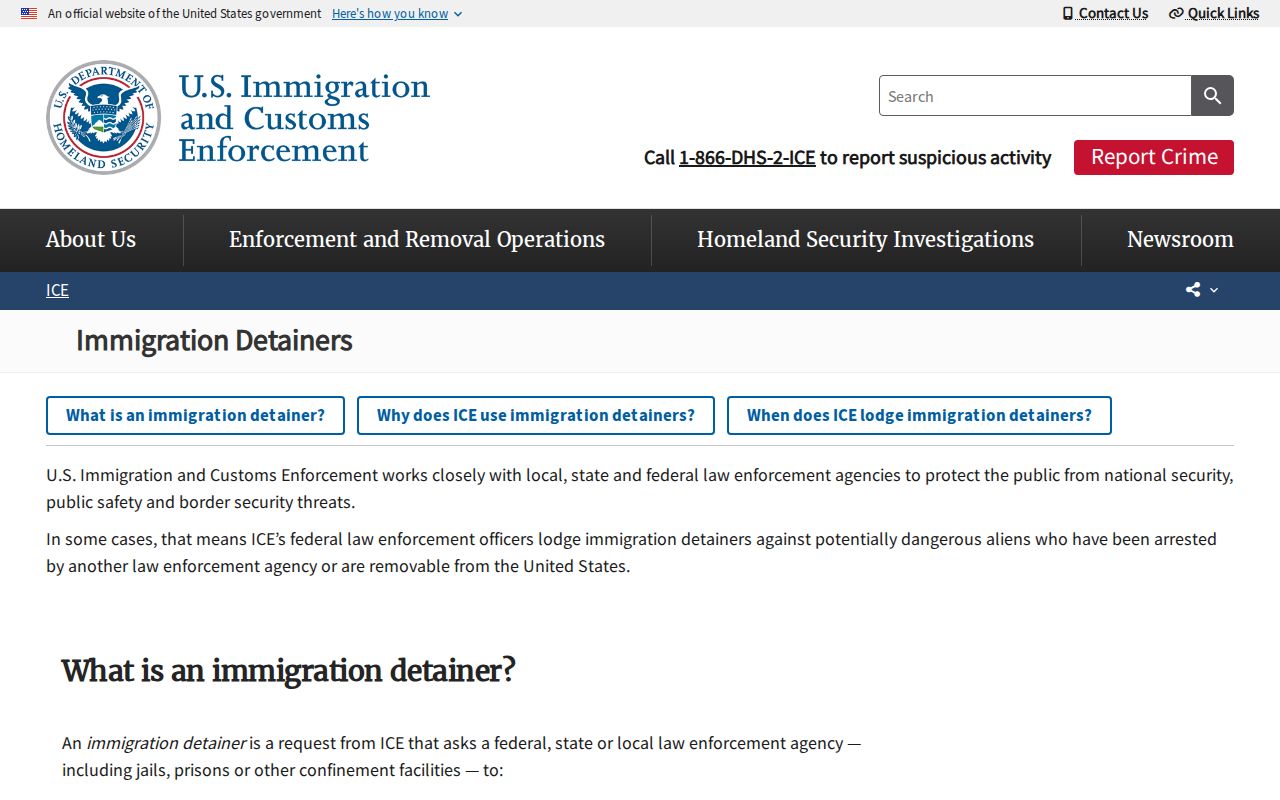
The image supports the transfer distinction, not a claim that LCDC currently operates under an ICE detention contract. Official sources confirm historical ICE activity but no current facility agreement.
Why LCDC Federal Records Differ
Federal boarding is not a rare theoretical branch in Lea County's facility description. The county historically reported more than 90 adult federal inmates within its average population figures. That number is historical, not a current count, but it shows why a federal handoff belongs near the start of every relevant LCDC release inquiry.
The minimal roster mixes local and federally held names without showing the legal custodian or case type. The inmate ID can help Adult Records find the local file, yet the receiving-agency field is what routes the next search. “NMCD” leads to the state offender system. “USMS” leads to the federal docket and Marshals channel. “BOP” leads to the federal locator. A documented immigration handoff leads to ICE.
New Mexico VINE is not a federal locator. Its state and participating local custody alerts should not be used to infer a BOP, USMS, or ICE release. Likewise, NMCD has no jurisdiction over the county's federal boarders merely because both systems operate in New Mexico. The federal docket, federal agency record, and county transfer-out entry remain the matched set for a USMS detainee who was housed at LCDC.
When those sources disagree, ask the agencies to reconcile their own dates. Do not replace a signed federal order or custodian-produced movement entry with an unofficial summary.
The full Lea County release search on the home page compares county, state, federal, court, and notification sources. A federal case should remain on the federal branch unless an official record shows a new custodian.
Note: A past BOP release date proves only that BOP custody ended on that date; check the docket and any receiving agency.