
Lea VINELink Service Status
Open the official NMCD VINE page before every search. New Mexico describes VINE as free, confidential, and available through computer, telephone, and text channels. English, Spanish, and Navajo are supported. Anyone seeking public custody or location information may use it, but agency participation and current service status still matter.
NMCD currently posts an upgrade notice. It says NMCD offender searches, new registrations, and notifications are unavailable during that work, while existing release notifications continue. The notice can change. A failed query during the upgrade is not proof of release. Use the NMCD offender search and listed contacts until the service returns, then recheck the VINE record. Keep an existing alert active during the interruption because NMCD distinguishes those continuing notices from new registrations.
Search One Lea VINELink Record
VINELink is strongest as a one-person check. Use an exact booked name or identifying number when the interface offers it. Common names, aliases, compound surnames, and spelling variations can create false matches or hide a valid one. Keep the agency and custody level in view throughout the search.
- Read the NMCD service notice, then open the New Mexico VINELink page or call 877-551-8463.
- Choose the agency or facility that currently or most recently held the person.
- Search the exact name or identifying number shown in the official custody record.
- Compare all available identifiers before opening a match. Do not rely on name alone.
- Record the exact status or event label, agency, date and time checked, and any release event time shown.
- Confirm through LCDC Adult Records, NMCD, or the court that fits the reported event.
The official New Mexico screen below shows the VINE search and notification route.
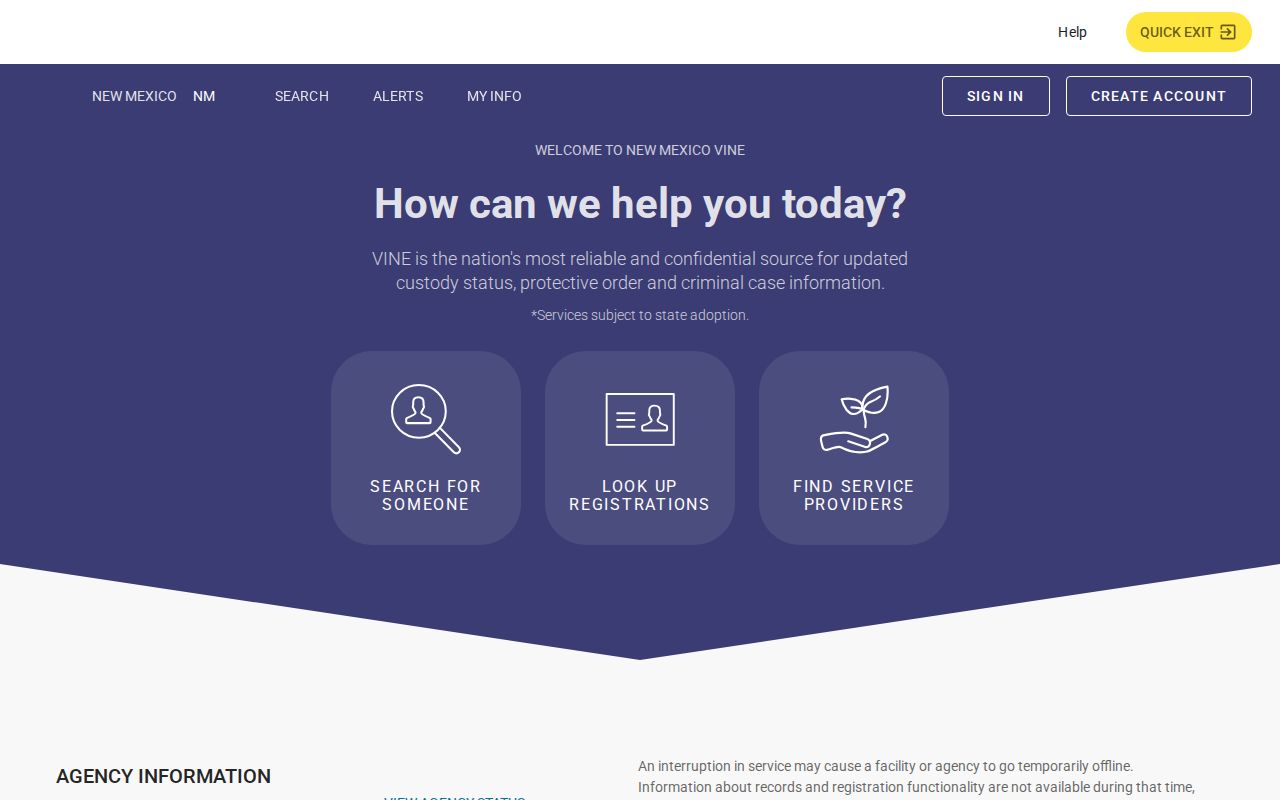
The interface begins the check, but the agency record finishes it. A person absent from VINELink may be outside the participating data, moving between systems, or affected by the posted outage.
Read Lea VINELink Release Fields
Fields differ by supplying agency and record. Read each label exactly. Do not convert a projected date into an actual release, and do not describe a custody transfer as freedom. VINE’s NMCD notices include release, out-to-court status, and escape, but not transfers between prison facilities.
| Field or event | Safe interpretation |
|---|---|
| Name or offender identifier | Helps match the alert to the intended person. |
| Agency or facility | Shows which source supplied the custody data. |
| Custody status | Reports the label in the current agency feed, subject to lag. |
| Release event and time | Signals an agency-reported change that needs direct corroboration. |
| Out-to-court or escape notice | Describes a distinct event, not a routine community release. |
A released LCDC detainee may need the county release/activity log to prove the time, authority, and destination. An NMCD result should be checked against the institution or Probation and Parole office. The Lea County release search explains the broader records chain for a named person.
Register Lea County Release Alerts
After selecting the correct person, choose notification and enter a phone number, text-capable number, or email as the live interface permits. Telephone registration uses a personal identification number, called a PIN. The PIN confirms that the alert reached the right recipient.
- Open the matched record and choose the notification option.
- Select phone, text, or email from the choices displayed for that agency.
- Enter the contact details carefully and complete the confirmation step.
- Create and securely retain the PIN for telephone alerts.
- When VINE calls, enter the PIN to acknowledge receipt.
- Re-register under the receiving facility after a county-to-county or county-to-NMCD transfer.
NMCD says calls continue until the PIN is entered or 48 hours pass. Release and custody events can occur at night, so calls may arrive then. A person who does not want late calls may prefer text or email where offered. Contact the operator if an alert appears wrong.
Two New Mexico Release Notices
New Mexico maintains two distinct notification paths. VINE registration covers automated custody-change alerts. Written victim notice for a violent-crime offender’s parole hearing and prison release runs through registration with the prosecuting District Attorney. NMCD states that signing up for VINE does not automatically enroll a victim in that written-notice process.
This local layer matters in Lea County. A VINE account may be active while the statutory written-notice registration is absent, or the reverse. Contact the prosecuting office for the written victim-notice route and use VINE for the automated service. Keep confirmation from each registration. The Parole Board’s closed individual hearings are also different from its public quarterly business meetings.
Victim Services lists 877-842-8464 for release, location, and supervision information for its constituency during published weekday hours. VINE’s operator line is reached at 877-551-8463 by pressing zero. Note: Never assume one registration created the other; retain each confirmation separately.
Confirm Lea VINELink Alerts
VINE is not a federal locator. It does not cover BOP or ICE custody as those agencies’ own systems do. That boundary is crucial because LCDC houses U.S. Marshals detainees. A person leaving LCDC under USMS authority may remain confined and may not appear in New Mexico VINE as expected.
Follow a county release alert with the LCDC release/activity-log entry and signed court order. Follow an NMCD event with the official offender search and institution or P&P office. Search BOP for a federal record, and use the federal docket or USMS channel when no BOP record resolves the move. ICE’s locator applies only to its limited current or recently released population.
The official ICE information-line page below is a fallback when a documented immigration handoff cannot be resolved online.
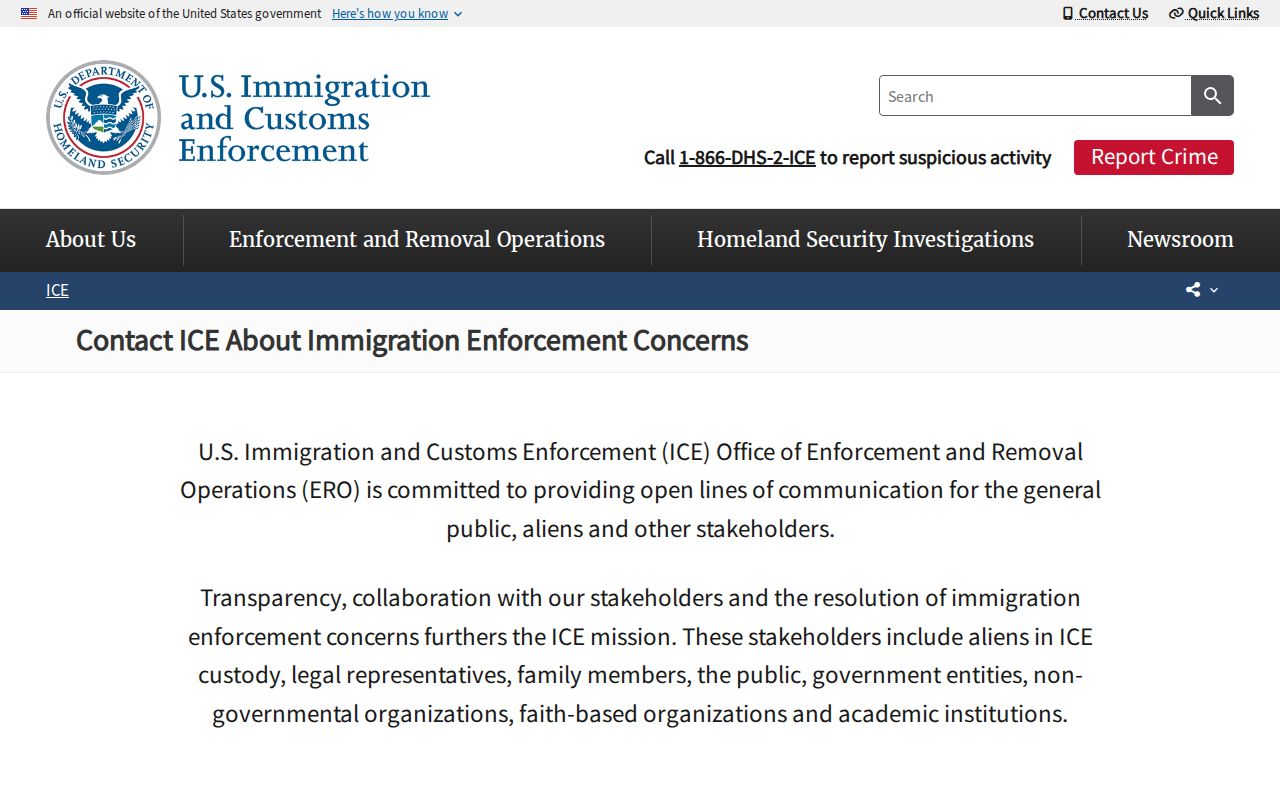
That line is not a general Lea County release source. Use it only after evidence points to ICE. A direct jail log or signed court order ranks above an automated alert when sources conflict.
When Lea VINELink Search Fails
Write down the time, query, agency, and error. Then switch to the right official fallback. For LCDC, call Adult Records when the matter is urgent and follow in writing for the release log. For a state prisoner, search NMCD by name or NMCD number and allow the nightly prison-data cycle after a very recent movement.
If two official sources conflict, ask the supplying agencies to reconcile them. The court order establishes release authority. The jail or prison record establishes physical execution. A notification reports what the connected feed sent. Those are related facts, but they are not interchangeable.
Match Lea VINELink Identities
Use at least two identifiers before acting on an alert. The exact booked name and agency number are strongest when both are available. A birth year, facility, or custody agency may help distinguish common names, but unnecessary personal data should not be copied or shared. Try lawful spelling variants only when the known record supports them.
Keep a small verification log. Record the system, URL, date and time, exact query, exact returned label, and the agency staff or written record used to confirm it. This practice matters when a release is new and one feed has updated before another. It also makes a correction request more precise if the name, identifier, or status appears wrong.
Lea Alerts Versus Registries
The New Mexico Sex Offender Registry is not a VINE substitute. It applies only to people with a legal registration duty. A registry result may show a person in the community, but it cannot prove when or why LCDC custody ended. Absence may reflect noncoverage, timing, jurisdiction, or lawful access limits.
Likewise, an NMCD probation or parole result is not a county release archive. Probation is court-ordered supervision and may follow a suspended or deferred sentence. Parole is conditional release from state prison. Neither category covers every person who left LCDC. The county release log remains the source for the local physical event.
A transfer requires a fresh check. NMCD tells VINE users to re-register after county-to-county or county-to-NMCD movement. For prison-to-prison transfers, the state says VINE does not send that event, so verify location directly through NMCD.
Lea VINELink Custody Boundaries
LCDC and NMCD do not maintain the same record. LCDC is the county detention center, and its Adult Records unit holds the local booking and release log. NMCD covers people in state corrections custody or under state probation or parole supervision. A transfer can end the county record while opening a state record after intake.
VINE may connect alerts from those sources, but it does not merge their legal meaning. A county “released to NMCD” entry is a transfer. An NMCD parole event can place a person in the community under conditions. Final discharge comes later. Preserve the agency name in every alert so the result is not detached from the system that supplied it.
For a federal boarder, begin with the LCDC transfer record. Then use the federal docket, BOP locator, counsel, or USMS district channel. BOP says a past release date with no location ends BOP custody only. Another justice system or supervised release may still follow.
Never silence an unexpected alert without checking it. Call the VINE operator and the agency that supplied the custody event, then retain both responses.